Introduction: The Old Economists Had a Point
Economists have always enjoyed reducing the chaos of the world into neat frameworks.
One of the most enduring of these frameworks comes from classical economics, which argues that all economic production rests on four pillars:
- Land
- Labor
- Capital
- Enterprise (Entrepreneurship)
The idea was developed and refined by early thinkers such as Adam Smith, David Ricardo, and Jean-Baptiste Say. Their theory was straightforward. Every product, every service, every industry requires some combination of:
- Land — the physical resources
- Labor — human effort
- Capital — financial investment and tools
- Enterprise — the vision that organizes everything
It’s an elegant model. Yet when you look closely at modern industries, something interesting appears. Most industries only rely heavily on two of these pillars.
Agriculture: Land + labor.
Manufacturing: Labor + capital.
Technology: Capital + enterprise.
Which leads to an uncomfortable realization for anyone involved in real estate development. Real Estate Development is one of the very few industries where all four pillars are required simultaneously.
Which naturally raises the question: Did we accidentally choose the most economically complicated business imaginable? Let’s take a closer look.
The Four Pillars of Production
Land: The Original Source of Wealth
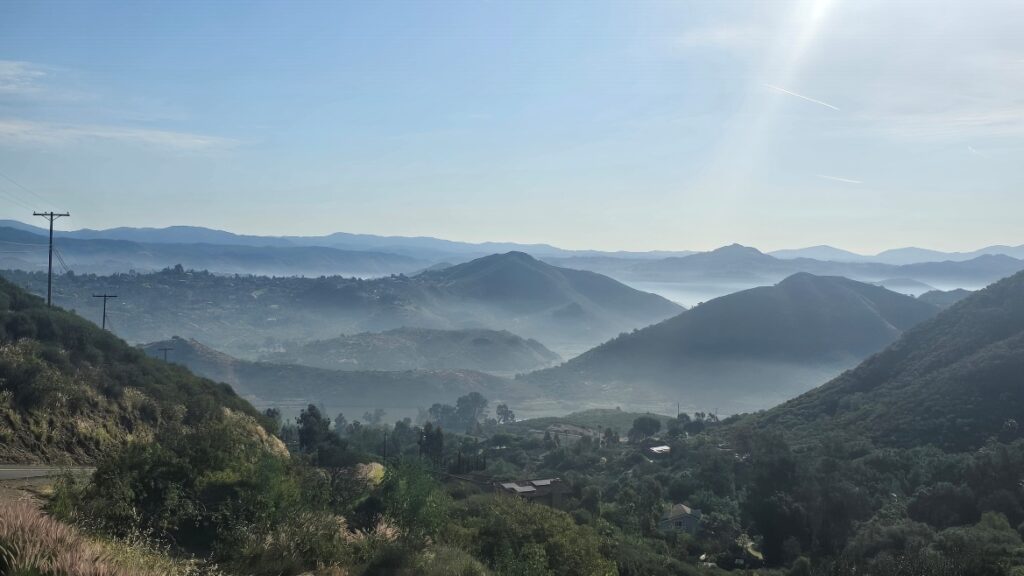
Long before venture capital and stock exchanges, land was the foundation of wealth. In agrarian societies, the entire economic system revolved around land ownership. Land produced food. Food sustained populations. Populations generated labor. Whoever controlled land effectively controlled the economy.
The British aristocracy understood this extremely well. For centuries, owning land meant one could live quite comfortably without engaging in the unpleasant activity of actually working.
As economist David Ricardo famously explained, landowners often benefited from economic rent—income generated simply from controlling a scarce resource. In agricultural economies, the dominant factors of production were therefore: Land + Labor
Farmers worked the land. Landowners collected rent. Everyone understood their role in the system. Simple.
Labor: The Industrial Shift
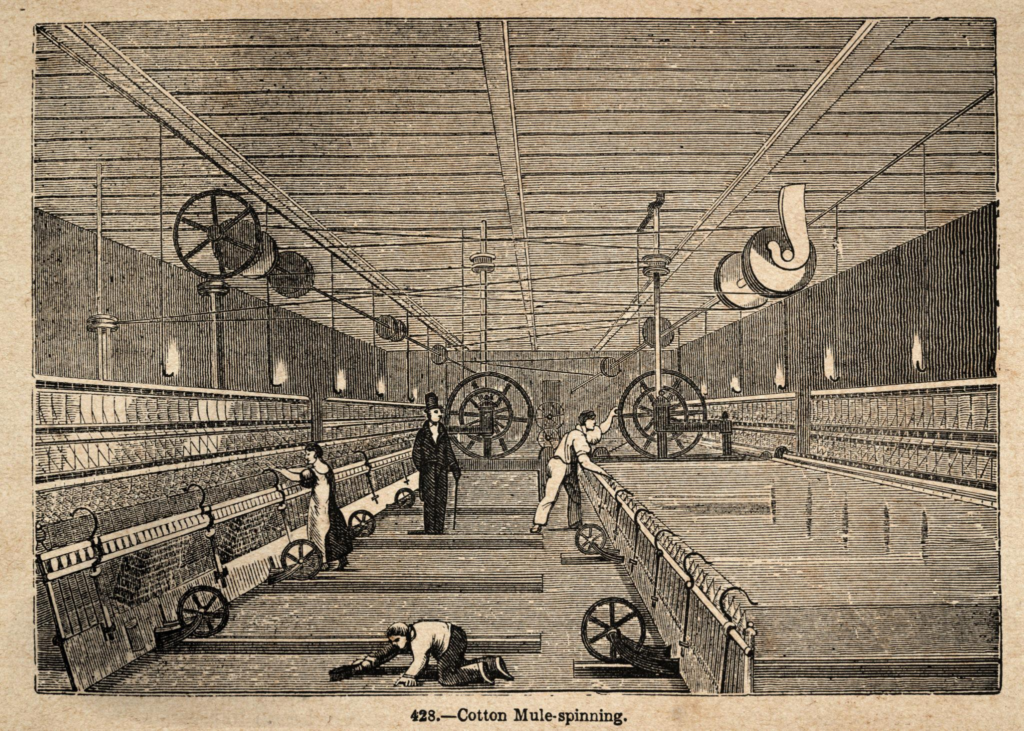
The Industrial Revolution changed everything. Suddenly, economic output was no longer limited by the productivity of farmland. Machines appeared. Factories emerged. Urban populations exploded. The center of economic gravity moved from rural land to industrial labor.
Factories required workers—lots of them. Cities such as Manchester, Detroit, and Pittsburgh became engines of industrial productivity because they concentrated labor and machines in the same place. The critical combination driving the economy became: Labor + Capital
Capital funded machinery, factories, and infrastructure. Labor operated those machines. Together, they created unprecedented productivity. Land, while still useful, was no longer the dominant economic factor. A steel mill could theoretically be built anywhere. A wheat field could not.
Capital: The Engine Behind Growth
Capital represents stored productive power.
It includes:
- Money
- Equipment
- Infrastructure
- Buildings
- Financial investment
Industrial economies ran on capital. Railroads, steel mills, shipping fleets, power plants—these projects required enormous financial resources before they generated any revenue. Which explains why bankers quietly became some of the most influential figures in industrial society.
They controlled access to capital. And capital controlled the pace of economic growth. In this system, entrepreneurs still mattered, but they operated largely within capital-driven industries. The real power lay with those who could mobilize massive financial resources.
Enterprise: The Invisible Glue
Enterprise or entrepreneurship is the factor that organizes the other three. Jean-Baptiste Say described entrepreneurs as individuals who move economic resources from lower productivity to higher productivity.
In earlier economies, entrepreneurship existed but rarely dominated the system. Today, however, entrepreneurship has become the defining factor of the modern digital economy. Consider the typical technology startup. It requires:
- Minimal land
- A small workforce
- Moderate capital
What matters most is the idea. Software companies can reach billion-dollar valuations with surprisingly small teams. The dominant economic formula in the digital economy has therefore become: Enterprise + Capital
Ideas combined with funding. This model is remarkably efficient. Which is precisely why technology companies scale so quickly.
The Curious Case of Real Estate Development
Real estate development does not fit neatly into this simplified model. In fact, it refuses to simplify at all. Because development requires all four pillars simultaneously.
Land: Non-Negotiable
Unlike technology startups, development cannot exist without land. Land is the starting point of every project. But in modern cities, land is not merely scarce—it is also deeply regulated.
Ownership alone does not grant the right to build. A developer must navigate zoning, environmental review, infrastructure requirements, and countless municipal approvals. Land, therefore, is not simply a physical resource. It is a political and regulatory asset. Owning land only begins the process.
Labor: Highly Specialized
Construction requires a vast ecosystem of skilled labor. A typical project may involve:
- Architects
- Civil engineers
- Structural engineers
- Surveyors
- Contractors
- Electricians
- Framers
- Plumbers
- Inspectors
Unlike software development—where a handful of engineers might build an entire product—real estate construction requires dozens or sometimes hundreds of specialized workers. And because construction labor shortages are common, labor becomes more than a cost. It becomes a constraint.
Capital: Immense and Patient
Development is one of the most capital-intensive businesses in the economy. Before revenue appears, a project must finance:
- Land acquisition
- Entitlements
- Engineering and design
- Permits
- Infrastructure
- Construction
- Interest payments
Capital is committed years before returns appear. Which means investors must possess both financial resources and considerable patience. A quality not always abundant in financial markets.
Enterprise: The Invisible Glue
The fourth pillar, enterprise, is where the developer enters the picture.
A crucial distinction must be made here. A developer is not a contractor. Contractors are part of the labor pillar. They build things.
Developers do something entirely different. The developer begins with a blank slate. Sometimes it is literally a vacant piece of land. Other times it is an underutilized property. In either case, the developer imagines the final product long before it exists.
- What belongs here?
- Homes? Offices? Retail?
- How will people live in this place ten years from now?
- What kind of neighborhood will emerge?
Once that vision exists, the developer begins assembling the pieces.
- Land acquisition.
- Entitlements.
- Engineering.
- Financing.
- Construction.
- Marketing.
- Sales.
The process resembles building something out of a massive set of economic Lego bricks. Every piece must fit. Every step must occur in the correct sequence. And if one piece disappears halfway through the process, the entire structure can collapse.
The contractor builds the structure.
The developer imagines the entire system before the first shovel touches the ground. From an economic perspective, the developer is performing the purest form of enterprise: organizing land, labor, and capital into productive use.
Unfortunately, there is a complication that classical economists failed to anticipate. In California, this complication deserves its own category:
The Fifth Pillar: Regulation
Classical economic theory assumes that if land, labor, capital, and enterprise align properly, productive activity will occur. California politely disagrees. Here it is entirely possible to have:
- Land zoned for housing
- Capital ready to invest
- Contractors ready to build
- Developers ready to take the risk
…and still be unable to build anything.
Why?
Because the California Environmental Quality Act may determine that the project could potentially disturb a sensitive species of plant, insect, or reptile whose existence was previously unknown to science.
Classical economists believed markets were governed purely by supply and demand. California prefers supply, demand, environmental review, appeals, litigation, and three separate traffic studies.
Which means the developer’s job becomes even more complex. They must not only coordinate the four pillars of production. They must also navigate a regulatory labyrinth capable of rewriting economic logic entirely. It is a bit like attempting to play chess while someone periodically changes how bishops move.
The California Stress Test
All of this brings us back to the original question: Did you choose the most economically difficult business?
Possibly. But the answer becomes clearer when viewed through the lens of California. Because if development requires balancing four economic pillars, California adds a fifth: Regulatory resistance.
Developers must manage not only land, labor, capital, and enterprise, but also:
- Planning commissions
- Environmental reviews
- Community meetings
- Appeals
- Stormwater mitigation plans
- And occasionally, lawsuits from individuals and organized groups convinced that your subdivision will negatively affect the emotional well-being of a shrub or a fairy shrimp.
In theory, regulation exists for good reasons: environmental protection, responsible planning, and orderly growth. In practice, however, California’s system has evolved into something so intricate that it occasionally appears designed to test the psychological endurance of developers.
Being a real estate developer in California is less a profession and more a daily exercise in maintaining one’s sanity. Each project becomes a multi-year puzzle involving economics, politics, engineering, and diplomacy.
A developer must be:
- Part economist
- Part financier
- Part urban planner
- Part construction manager
- Part negotiator
- And occasionally part therapist when explaining timelines to investors.
Yet despite the complexity—and sometimes because of it—development continues. Cities still grow. Families still need homes. Communities still need places to live. And somewhere, a developer is standing on a vacant piece of land imagining what it might become.
The classical economists would recognize this immediately. It is enterprise in its most complete form. The developer stands at the center of the economic equation, holding together the four pillars that create real wealth. And if that developer happens to be working in California, they deserve a quiet round of applause.
Or perhaps a medal. Preferably one that comes with expedited permitting.
By Alex Lisnevsky